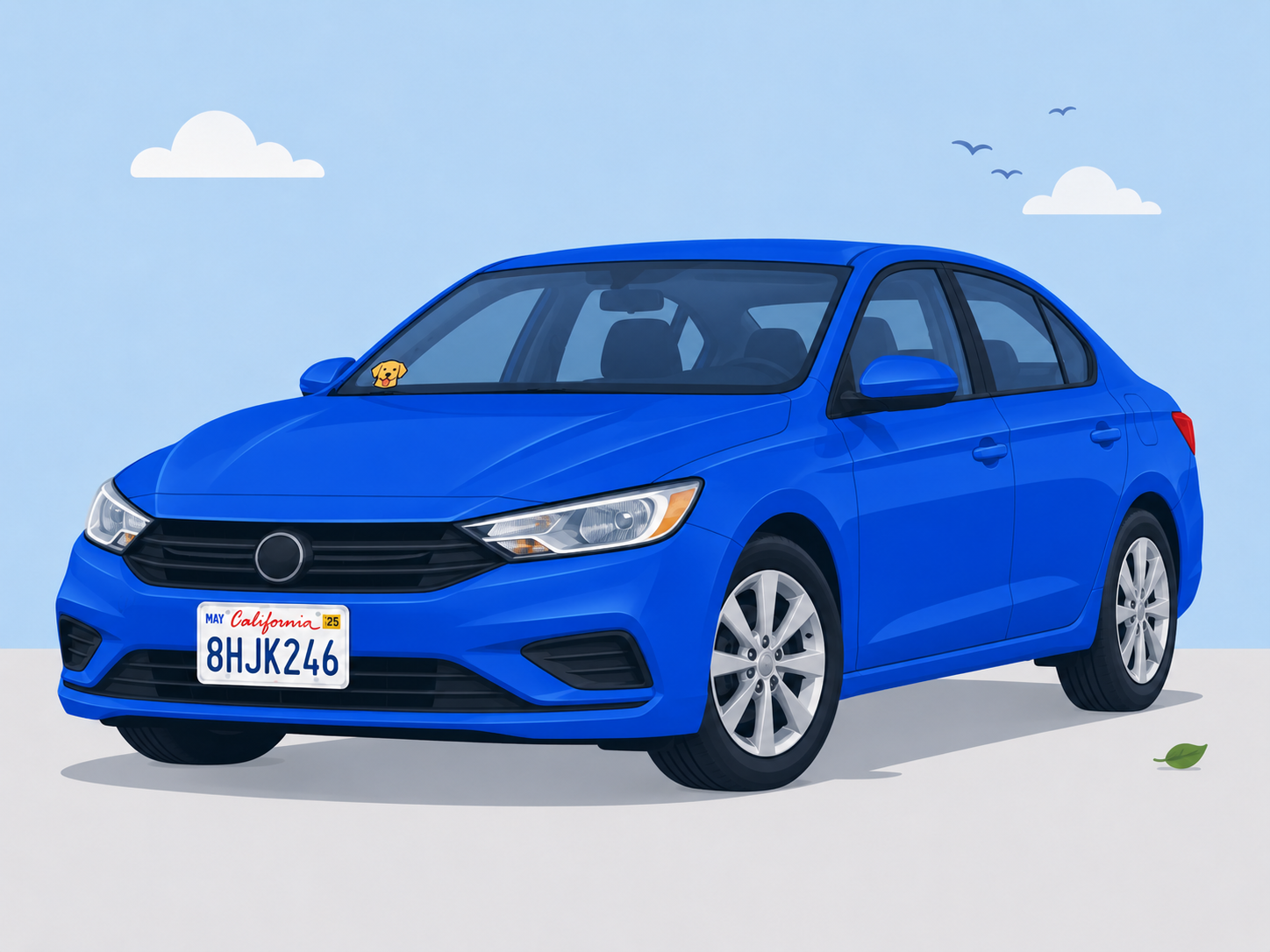
That moment before you post
You wash the car, find a clean background, and take the kind of photos that help a listing sell. The paint looks sharp. The wheels are straight. The lighting finally cooperates. Then you zoom in before posting and notice the plate is perfectly readable.
That pause is normal. Sellers who blur license plates are not necessarily being paranoid. They recognize that publishing a vehicle photo is different from showing a plate at one stoplight.
A stranger seeing your plate at one stoplight gets a fleeting look. A stranger seeing your plate in a marketplace listing, forum thread, or social post gets a static image they can save, copy, repost, and pair with everything else you have shared.
In person, the plate is one detail among many. In a listing, it sits next to your seller profile, location, asking price, message history, and sometimes clues about where the vehicle is parked. The image is attached to context.
Sellers often spend time hiding house numbers, removing mail from the seat, and cropping out personal details in the background, then leave the plate untouched. That is backwards. The plate is often the cleanest, most standardized identifier in the frame.
That is why the job changes for sellers. You are not just taking nice photos. You are managing exposure. The plate is the one detail in the image that can connect the car to records, habits, and identity in ways the paint color or wheel choice cannot.
If a photo is meant to be shared online, treat the plate like any other identifying detail you would rather not hand to strangers.
Blurring does not make the listing less legitimate. Buyers can still inspect the actual plate in person before money changes hands. What blurring does is reduce the amount of structured information available to people browsing, scraping, copying, or misusing your photos long before a real buyer ever contacts you.
The core reasons for blurring your plate
A visible plate reveals more than most people think
A license plate can act as a path to other information. The main issue is not that every random person can instantly pull a full file on you. It is that the plate is a usable identifier, and posting it online expands who can try to copy, store, match, or reuse it.
Older but still useful discussions, including Jalopnik's look at obscuring plates in photos, make the same distinction: a plate seen on the street is local and temporary, while a plate published in a public image becomes easy to copy, store, repost, and match with other breadcrumbs.
The exposure also depends on which country's records the plate connects to. In the UK, for example, the official gov.uk service lets anyone enter a plate and see the car's MOT history, recall status, and current tax and insurance standing — free, no reason required. That layer is sitting one lookup behind every public plate, before any data broker or DVLA "reasonable cause" filing is involved. The US is gated harder at the DMV, but compensates with a richer commercial data-broker layer that ties plates to names and addresses anyway.
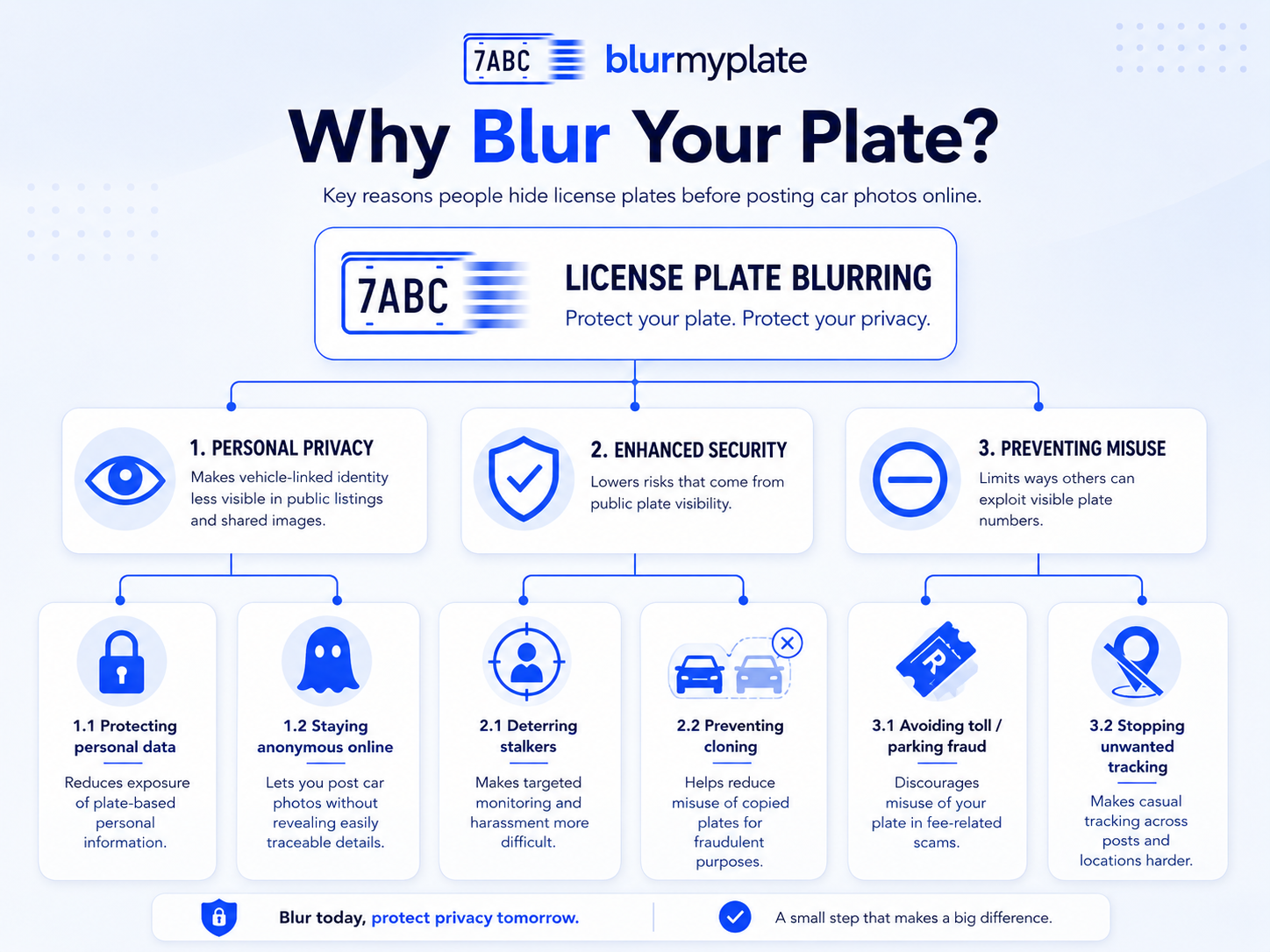
- Identity linkage: a seller account, neighborhood clues, and a visible plate can combine into a clearer picture of who owns the vehicle.
- Pattern exposure: repeated posts can show where the car appears, when it is parked, and what property it sits near.
- Scraping risk: public listings often get copied to aggregators, scam ads, and image archives you never intended to use.
Blurring is also a publishing standard
In commercial, dealer, media, and public-facing settings, blurring plates is often treated as a safer publishing practice. Once images hit marketplaces and social platforms, they can be cached, indexed, screenshotted, and copied well beyond the original audience.
Privacy-focused redaction tools and media workflows often treat plates as potentially identifying depending on context. The practical point is simple: if a visible plate does not improve the listing, there is little reason to publish it to everyone.
Blurring is one of those rare edits that removes risk without removing useful selling information.
For private sellers, the same logic holds. Buyers care about condition, trim, tires, bodywork, interior wear, and service transparency. They do not need a public plate number to decide whether to message you.
Real-world risks of an exposed plate number
The risk is not that everyone who sees your listing will misuse it. The risk is that one copied photo can be enough for the wrong person to create work you then have to untangle.
How a harmless photo becomes a scam asset
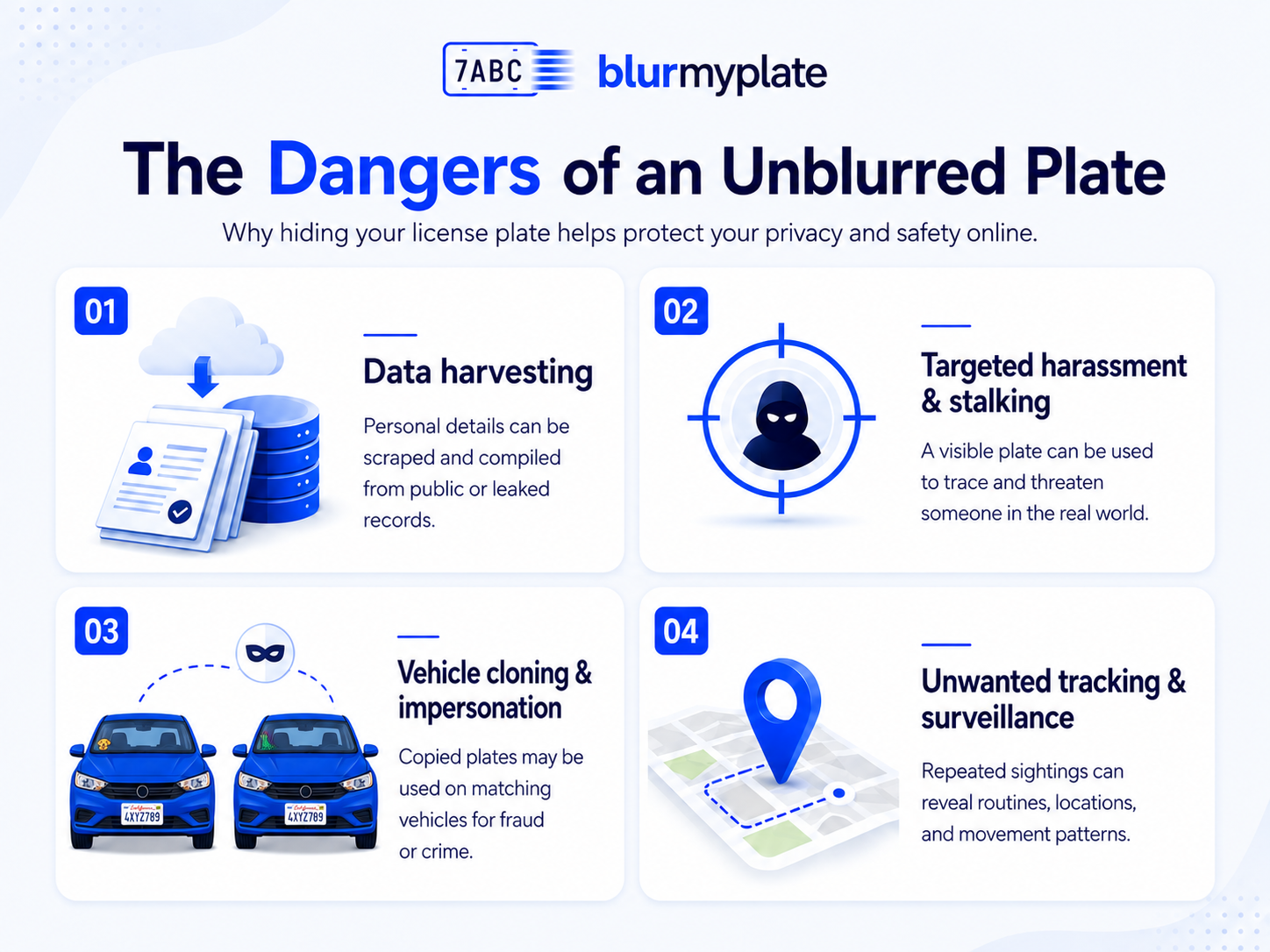
A visible plate turns an ordinary listing photo into more believable raw material for scams. A scammer can copy your photos and repost the car elsewhere at a tempting price. If the authentic plate is visible, the fake ad looks more convincing because the images feel tied to a genuine vehicle.
Plate cloning is another concern, and the selection isn't random. Police and fleet-security advisories describe a deliberate shopping pattern: cloners scan public photos for vehicles that match their own car's make, model, and color, and prefer matches geographically far from where they operate so the real owner never spots the duplicate at a supermarket or service station. A listing photo gives them everything they need in one place — plate, make, model, paint — without ever leaving home. Once a cloned plate is on the road, every automated reader — speed cameras, red-light cameras, toll gantries, parking-enforcement scanners — logs your number, not the cloned car's, and the legal cleanup falls on the innocent owner.
Targeted harassment is the third scenario sellers tend to underestimate. If someone already has a reason to focus on you, a visible plate can help connect a car photo to a routine, neighborhood, parking spot, or identity. The risk rises when the photo includes your driveway, office lot, school pickup line, or a consistent location tag.
There is a fourth, more arbitrary scenario: misdirected internet outrage. Dashcam clips, hit-and-run posts, and viral "this driver did X" social posts often include a clear plate. Strangers run it through a lookup service, arrive at the registered owner, and start the harassment there — even when the actual driver was a friend, a teenager, a rental tenant, or a different car running cloned plates. Blurring before you publish your own photos isn't only about your behavior; it's about not getting pulled into someone else's mistaken-identity pile-on.
The risk is not just privacy. It is friction.
You do not need a dramatic worst-case scenario for blurring to make sense. Fake buyer messages, reposted listings, saved photos, unwanted attention, and confused shoppers who saw your car on another page are all avoidable friction.
The useful selling information stays in the photo: the body condition, trim, paint, wheels, interior, and overall presentation. The only thing you remove is the readable identifier that strangers do not need at the browsing stage.
If the plate does not help you close the sale, it is usually not worth giving away for free.
Common myths about plate blurring
My car is already public
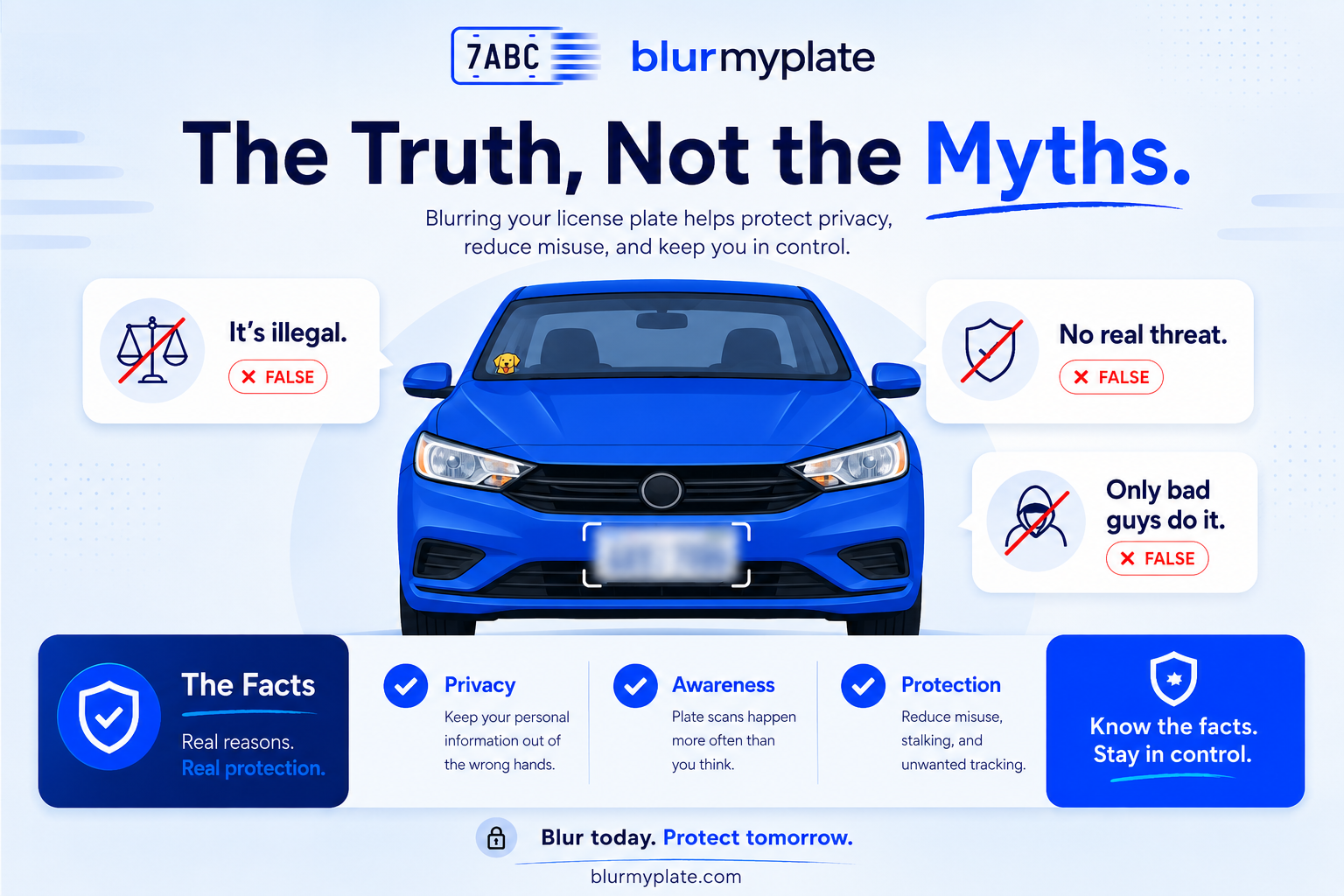
Street visibility and internet visibility create different kinds of exposure. A passing driver sees your plate for a moment. A public listing can tie that same plate to your name, account history, town, asking price, and photos of where the car is kept.
The goal is not secrecy for its own sake. The goal is reducing attack surface once a photo becomes a published digital asset instead of a passing real-world sighting.
Blurring does not make you look suspicious
Serious buyers care about body condition, panel gaps, tire wear, interior wear, warning lights, service records, and VIN verification during a real inspection. Blurring the plate leaves those checks intact. It only removes a standardized identifier that random strangers can harvest from a screenshot.
Buyers who are ready to transact usually ask for service history, underbody photos, cold-start video, a VIN check, or a time to see the car in person. A blurred plate rarely blocks those conversations. It simply keeps every stranger on the internet from getting the same identifier at the first glance.
Buyers need enough information to evaluate the car. They do not need every stranger on the internet to get the same access.
When and where blurring matters most
Some situations carry more exposure than others. If the image will circulate beyond a controlled group, blurring moves from optional to sensible.
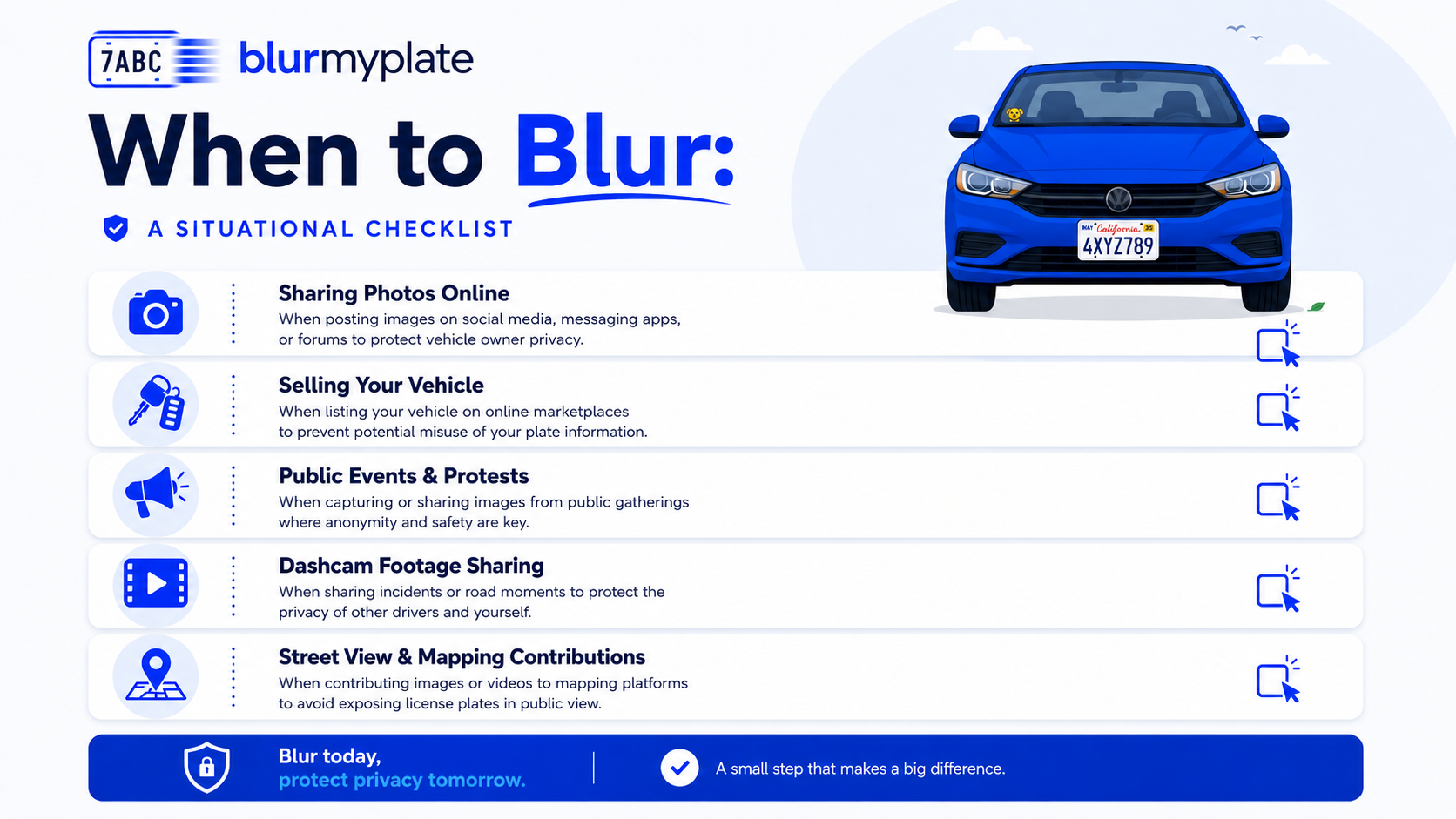
High-risk posting situations
- Marketplace listings: Facebook Marketplace, Craigslist, OfferUp, Autotrader, Cars.com, and similar platforms attract buyers, copycat scammers, and image scrapers.
- Public social posts: Instagram, TikTok, X, Reddit, and open Facebook posts often get reshared outside your intended audience.
- Location-rich photos: a car parked in your driveway, apartment lot, workplace garage, or school zone reveals more than the vehicle itself.
- Dashcam clips and street content: if you upload footage, your own plate or someone else's may appear in a frame that lives online for a long time.
- Forum build threads: repeated updates can create a timeline of where the car is, how often it is out, and what details identify it.
A simple posting checklist
- Can strangers save the image easily? If yes, blur.
- Does the post include your profile, location, or routine? If yes, blur.
- Could someone reuse these photos in a fake listing? If yes, blur.
- Is the plate necessary for a buyer's first decision? Usually, it is not.
- Are there reflections showing the plate elsewhere? Check glass, paint, chrome, mirrors, and cropped thumbnails.
Lower-risk situations exist. Sending photos privately to a known buyer for final verification is different from posting a public listing. Even then, most sellers lose very little by keeping the plate obscured until the deal is further along.
How to blur license plates quickly and safely
Speed matters, but coverage matters more. Once a photo is public, it can be copied, reposted, scraped into fake listings, or saved for later. Blurring your plate is a small editing step that reduces that attack surface before the images leave your phone or laptop.
Manual edits versus automated tools
Phone markup tools are fine for a tiny batch. Apple Photos markup, Android gallery tools, Snapseed, and Photoshop Express can hide a plate quickly. The trade-off is consistency: a rushed scribble can leave characters readable, and it is easy to miss the rear plate in a second shot or a reflection in glossy paint.
Desktop editors such as Photoshop give you more control, but opening every file one by one adds time without adding much value for most private sellers.
Dedicated plate-blur tools are built for volume and speed. blurmyplate automatically detects and blurs plates in uploaded photos, supports JPG, PNG, and HEIC files, supports bulk uploads, and strips EXIF metadata.
| Method | Works well for | Watch out for |
|---|---|---|
| Phone markup | One or two photos | Weak scribbles, missed rear plates, metadata left intact |
| Desktop editor | Careful manual control | Slow batch work and repetitive exports |
| Dedicated plate blur like blurmyplate.com | Fast listing prep and batches | Built for fast detection with a preview before export |